


The Beginnings of Atmospheric Electricity Measurements at the Geophysical Observatory in Świder
Measurements of atmospheric potential gradient
To measure the atmospheric electric field – or, equivalently, the electric potential gradient (PG) – the Świder team used cutting‑edge instruments common at leading observatories of the time.
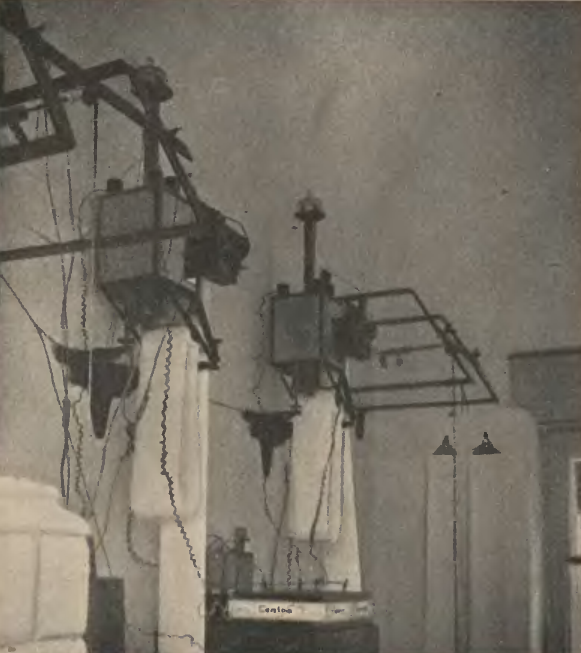
Two Benndorf electrometers inside the atmospheric electricity house recording atmospheric electric potential gradient in Świder in the 1930s
Benndorf recording electrometers
The Observatory purchased L. Castagna Benndorf recrding electrometers, precision instruments capable of detecting tiny changes in electrical potential. These devices used a system of metal quadrants and a lightweight needle immersed in a conductive solution, to translate electrical forces into movements recorded on paper charts. The traces they produced, called electrograms, show the rise and fall of the potential gradient throughout the day.
Radioactive collectors
The electrometers were connected to radioactive collectors, metal plates coated with a small amount of ionium (a thorium isotope). The radiation helped the plates reach the same electrical potential as the surrounding air, allowing highly responsive measurements of the electricity in the air.
The atmospheric electricity house
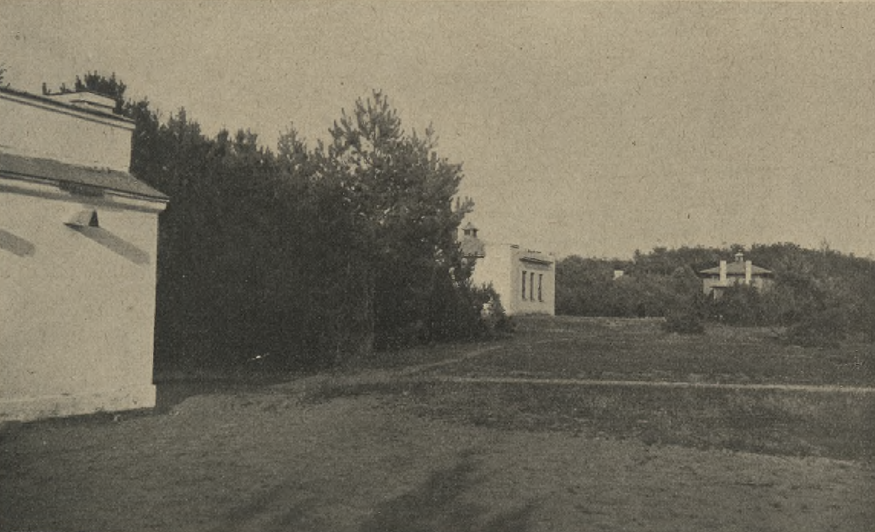
A special building, completed in 1925, and later refurbished, housed the instruments. Holes in the walls allowed wires from outdoor collectors to run inside to the electrometers, while the surrounding open field ensured that the measurements reflected local atmospheric natural environment. Although simple, this setup allowed researchers to collect continuous, valuable data for nearly a decade.

recording electrometer (1906)
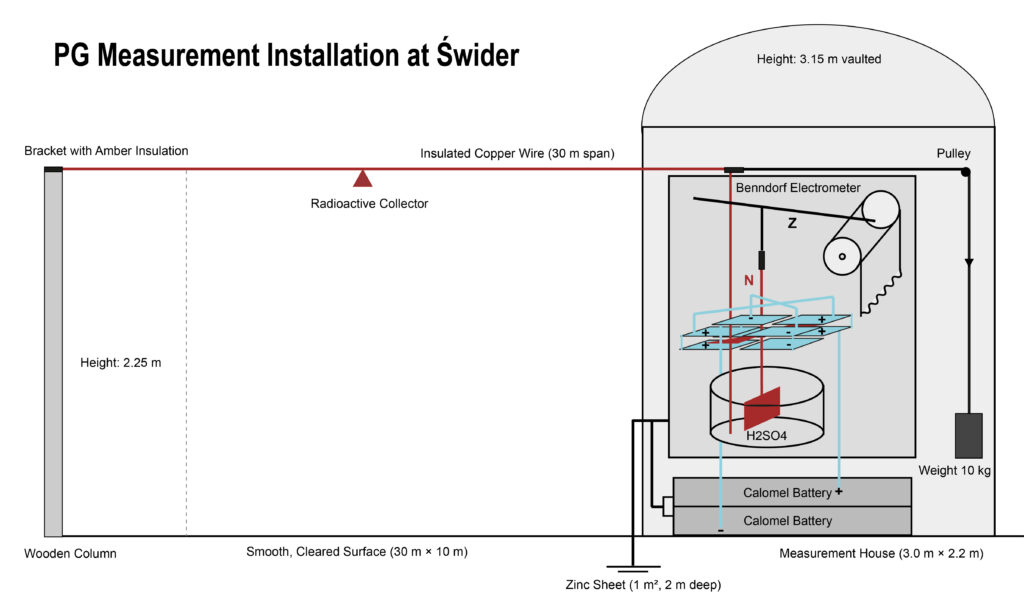
Photo and diagrams installation of the measurement of the atmospheric electric potential gradient at Świder 1929-1939 (for more details and photo information see Odzimek 2026).
Last updated 20 March 2026